Our Legacy: Monsignor Frank McCosker
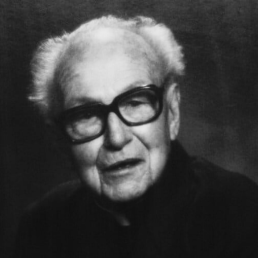
In the late 1940s, when Monsignor James Francis (Frank) McCosker took the helm as director of the Catholic Welfare Bureau in Sydney, he inherited more than an office – he inherited a vision. Four professionally trained Catholic lay women social workers – Norma Parker, Connie Moffitt, Eileen Davidson, and Mary Lyons – had laid the groundwork for something revolutionary in Australian Catholic welfare. Monsignor McCosker would take that foundation and build an enduring legacy that would transform the landscape of social services across the nation.
Monsignor McCosker believed with unwavering conviction that Catholic welfare was fundamentally about inclusion rather than exclusion of all people, about critical analysis of Government agendas rather than subservient compliance to them, and about professionalism in welfare rather than well-meaning benevolence and dependant charity. This philosophy positioned the Church not as a charitable afterthought, but as a principled and intellectually rigorous force capable of shaping national social policy while maintaining independence of thought.
In 1956, Monsignor McCosker took a bold step that would amplify Catholic social services far beyond diocesan boundaries. Working alongside Bishop Eric Perkins from Melbourne and Fr Luke Roberts from Adelaide, he established the National Catholic Welfare Committee (NCWC) – the first national peak body for Catholic providers of social services in Australia. With modest funding but extraordinary determination, this small organisation would punch far above its weight in influencing government policy with enduring outcomes.
For four decades, the unprecedented Sydney–Melbourne partnership between Monsignor McCosker and Bishop Perkins had a major impact on Catholic social policy. Together, they worked not in isolation but in collaboration, engaging in interfaith dialogue and partnering with other religious groups to build broader community support and amplify the social change needed to uplift vulnerable Australians. The peak body they created secured crucial state aid for the church’s welfare agencies, which given insufficient church funding, proved vital by the mid-1980s.
Monsignor McCosker’s influence reached into the corridors of power in Canberra. When then Deputy Opposition Leader Gough Whitlam received a paper from the NCWC titled “A Case for Graded Child Endowment and Increased Maternity Allowances,” he wrote to Monsignor McCosker on Qantas notepaper, noting it was something he would draw on in Parliament. This was McCosker’s approach – meticulous research, principled advocacy, and persistent engagement that led to real policy change, from securing subsidies for vulnerable children to establishing services like Meals on Wheels, Foster Care, Adoption Practice, the Council of Social Services, and Marriage Counselling as part of Matrimonial and Family Law.
Monsignor McCosker had a remarkable way of putting the spotlight on the causes of long-term poverty, challenging attitudes to welfare provision to enhance the dignity of the impoverished. His obituary in The Australian in 1996 declared he was devoted to those people who were mostly unable to help themselves, and though he was awarded the Order of the British Empire (OBE) in recognition of his extraordinary contributions to the country, worldly honours did not change him. He remained, until the end, the priest who understood that true welfare work was about restoring human dignity, not dispensing charity.
When Monsignor McCosker stepped down as Secretary of the NCWC in 1974 after eighteen years of service, the organisation was renamed the Australian Catholic Social Welfare
Commission, reflecting its expanded role and influence. Today, that organisation continues as Catholic Social Services Australia, and we honour Monsignor McCosker’s legacy through the McCosker Orations, which bring together leading voices in social justice to carry forward his vision of a more inclusive, just, and compassionate society. |